
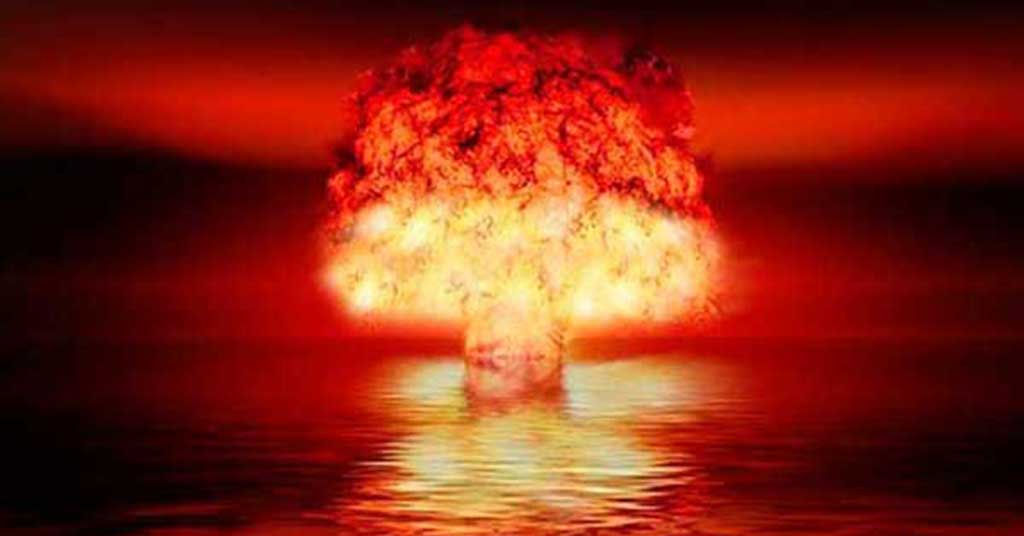
Maj. Gen. Leslie Groves made the atomic bomb possible, yet history remembers Oppenheimer
The theoretical physicist J. Robert Oppenheimer is conventionally described as the father of the atomic bomb. After all, he was the chief scientist on the Manhattan Project, the top-secret wartime effort that culminated in the August 1945 atomic bombings of Hiroshima and Nagasaki, effectively ending the Second World War.
Interest in Oppenheimer’s legacy was reignited by the 2023 biopic Oppenheimer, but as Evan Thomas’s 2023 book Road to Surrender makes clear, Oppenheimer had an enabler. Indeed, you could plausibly describe Maj.-Gen. Leslie Groves as the Manhattan Project’s indispensable man.
Born in 1896, Groves was a career army officer with a reputation for getting things done. He wasn’t what you’d call a nice man. Words like abrasive, sarcastic and demanding are frequently used to describe him. In the end, it was his disinterest in human relationship norms that put a ceiling on his military career.
The Manhattan Project was a sprawling effort, spanning disciplines and jurisdictions. It needed strong, single-minded direction. And as one suffering subordinate later put it, “If I had to do my part of the atomic bomb project over again and had the privilege of picking my boss, I would pick General Groves.”
Groves was also the man who selected Oppenheimer as the lead scientist. It wasn’t a safe choice. Oppenheimer had familial communist connections, and security concerns were raised. But Groves cast them aside.
Although U.S. President Harry Truman embraced responsibility for using the bomb, Groves thought otherwise. In his view, Truman wasn’t in control but “like a little boy on a toboggan,” carried along by forces already in motion and beyond his full understanding.
There’s some truth to that.
Truman was Franklin D. Roosevelt’s third vice president, and Roosevelt gave him little to do. He was, to put it mildly, out of the loop—knowing nothing about the bomb until he became president upon Roosevelt’s death on April 12, 1945.
And while Truman knew of the plan for a second strike if Japan didn’t surrender after Hiroshima, he wasn’t told the specific timing of Nagasaki until after the bomb was dropped. Only then did he assert direct control, forbidding further atomic strikes without his express approval.
Groves, for his part, had no moral ambivalence about using the bomb. His only concern was effectiveness—meaning ending the war and avoiding the enormous U.S. casualties expected from a land invasion.
That’s why he opposed Secretary of War Henry Stimson’s insistence that Kyoto be spared. To Groves, Kyoto’s status as Japan’s ancient cultural capital made it an ideal target. Maximizing effectiveness meant striking where it would hurt most.
An important contribution of Road to Surrender is its examination of what was happening inside Japan. The war effort there was essentially run by a consensus-bound Big Six comprising the prime minister, foreign minister and four senior military officers. The military, however, was the dominant voice.
And the military didn’t believe Japan had been beaten. They were holding fast to the idea of the Decisive Battle.
The plan involved thousands of kamikaze planes and hundreds of suicide boats, aiming to destroy up to half of the American invasion fleet before it landed. Once ashore, American troops would face about 900,000 regular soldiers and a vast civilian militia armed with spears and pitchforks. One handbook advised civilians: “When engaging tall Yankees, do not swing swords or spears sideways or straight down; thrust must be straight into their guts.”
Thomas summarizes the thinking this way: “The Japanese do not have to ‘win’ the Decisive Battle. They just have to make the cost of victory unbearable to the Americans.”
Even after Nagasaki, the Japanese military resisted surrender. U.S. Army chief of staff George Marshall began exploring alternatives, including the use of up to nine atomic bombs as battlefield weapons in support of an invasion. Truman also considered approving Tokyo as a third target. Fortunately, Emperor Hirohito intervened and ordered surrender. Japan announced its surrender on Aug. 15, 1945—now commemorated as VJ Day.
After the July 16 atomic bomb test in New Mexico, Groves’s deputy, Gen. Thomas Farrell, remarked that the war was over. “Yes,” replied Groves, “after we drop two bombs on Japan.”
As cold-blooded as that may sound, perhaps Groves was simply a realist.
Troy Media columnist Pat Murphy casts a history buff’s eye at the goings-on in our world. Never cynical – well, perhaps a little bit.
The views, opinions, and positions expressed by our columnists and contributors are solely their own and do not necessarily reflect those of our publication.
Troy Media empowers Canadian community news outlets by providing independent, insightful analysis and commentary. Our mission is to support local media in helping Canadians stay informed and engaged by delivering reliable content that strengthens community connections and deepens understanding across the country.

