
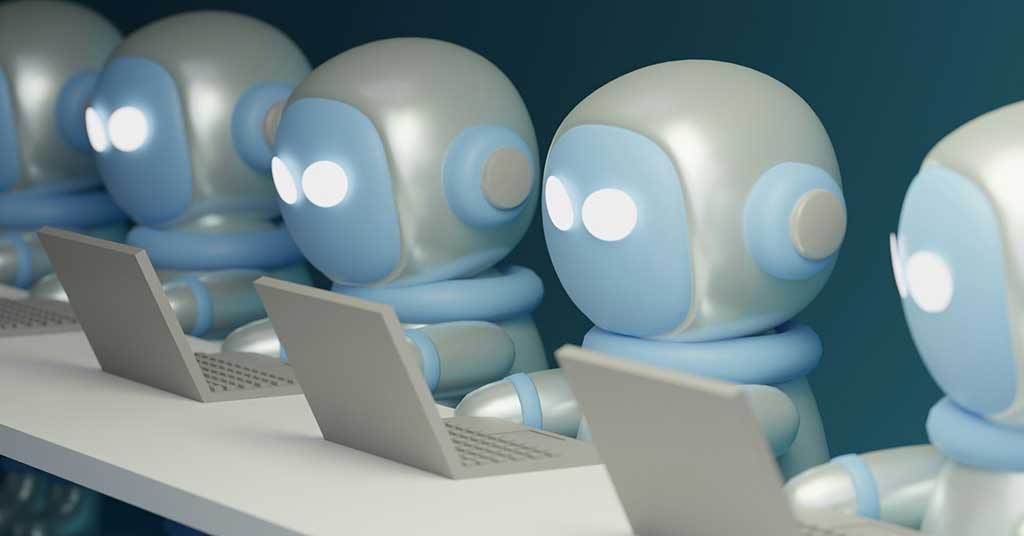
AI is putting powerful creative tools into the hands of everyday people and the old gatekeepers are starting to sweat
Artificial intelligence isn’t just automating tasks, it’s transforming how we think, compete and create. But if we want AI to amplify human potential, we must rethink what competition looks like in the age of AI-powered creativity.
AI tools like ChatGPT (a text generator), Midjourney (an image creator) and GitHub Copilot (a code-writing assistant) are turning creativity from a scarce asset into an abundant, accessible resource, lowering barriers for individuals, startups and students alike.
The old creative economy was defined by gatekeepers. The new one is driven by who has the tools and who’s bold enough to use them.
In this environment, competition becomes the spark, and collaboration the multiplier. Together, they form the creative engine of the future. But to harness it properly, we need to ensure that competition stays fair and creative spaces remain open to everyone.
Recent recognition from the Royal Swedish Academy of Sciences offers a timely reminder. This year’s Nobel-style economics prize, awarded to Philippe Aghion, Canadian-born economist Peter Howitt and Joel Mokyr, highlighted the power of “creative destruction”—the idea that innovation doesn’t thrive in monopolies or chaos, but in a sweet spot of balanced, neck-and-neck rivalry.
Aghion’s research shows that the link between competition and innovation is inverted-U shaped. Too little rivalry breeds complacency. Too much causes burnout. But just enough pressure forces capable individuals and firms to move faster, think deeper and experiment more boldly. That’s exactly the zone AI is pushing us into today.
We can see it everywhere: from the race to build leading AI systems (OpenAI vs. Anthropic vs. Meta) to open-source models (free-to-use AI tools like Llama, Mistral and Falcon), the AI space is thriving on tension. Not destructive tension, but a kind that accelerates progress. Even large firms are being forced to adapt quickly.
But here’s the paradox: the more AI advances, the more collaboration becomes the most powerful form of competition. Nobel laureate Paul Romer’s concept of “non-rival ideas” explains why. When knowledge is shared—through open tools and systems that work together across platforms—it can be reused infinitely. Rivalry doesn’t disappear. It shifts. Competing platforms still push to differentiate, but often by sharing more, not less.
This dynamic is playing out across industries:
- Education: AI tutors are pushing online learning tools to personalize learning, empower teachers and improve assessment models.
- Media and design: Tools like DALL·E, Midjourney and Stable Diffusion compete on features, but together expand what artists can express.
- Workplace applications: Rival AI copilots are breaking down information that is locked up inside companies, giving more employees the freedom to explore and build.
Recent studies show GitHub Copilot users complete coding tasks 56 per cent faster. Customer-service bots increase agent productivity by 15 per cent, especially for new workers. And visual content creation is now faster, cheaper and more scalable than ever.
Across Canada, AI is already reshaping classrooms, small businesses and media outlets, making it easier to teach, build and communicate with fewer resources.
What happens next affects all of us—not just programmers and tech firms. If AI makes it easier to create, it also raises the stakes for who controls the tools and who benefits from the progress. Will these breakthroughs empower more people, or just give the powerful even more control? That depends on how we shape the rules now.
This is what economists once dreamed of: productivity gains not from squeezing more hours out of workers, but from unlocking new forms of play, experimentation and iteration. AI turns the workbench into a playground. It helps small teams punch above their weight. It gives learners a head start.
Still, amid the algorithms and automation, one truth remains: human beings still set the direction. AI can optimize, summarize and accelerate but only we can decide what’s worth pursuing. Insight, ethics and imagination remain our unique edge. And in a world of faster tools, those qualities matter more than ever.
That’s why leaders, educators and creators face a serious challenge: how to guard rivalry without turning it into warfare. How to support open systems that lift everyone. And how to ensure that what we automate still serves what we value.
AI can help us work faster and create more, but it’s still up to us to choose the direction. What we build with these tools will reflect the values we bring to them. The future of creativity doesn’t belong to machines. It belongs to the people who know what matters.
Dr. Perry Kinkaide is a visionary leader and change agent. Since retiring in 2001, he has served as an advisor and director for various organizations and founded the Alberta Council of Technologies Society in 2005. Previously, he held leadership roles at KPMG Consulting and the Alberta Government. He holds a BA from Colgate University and an MSc and PhD in Brain Research from the University of Alberta.
Explore more on Artificial Intelligence, Innovation, Competition, Collaboration
The views, opinions, and positions expressed by our columnists and contributors are solely their own and do not necessarily reflect those of our publication.
Troy Media empowers Canadian community news outlets by providing independent, insightful analysis and commentary. Our mission is to support local media in helping Canadians stay informed and engaged by delivering reliable content that strengthens community connections and deepens understanding across the country.

