
Some educators think AI can replace memorization, but that’s a shortcut to ignorance
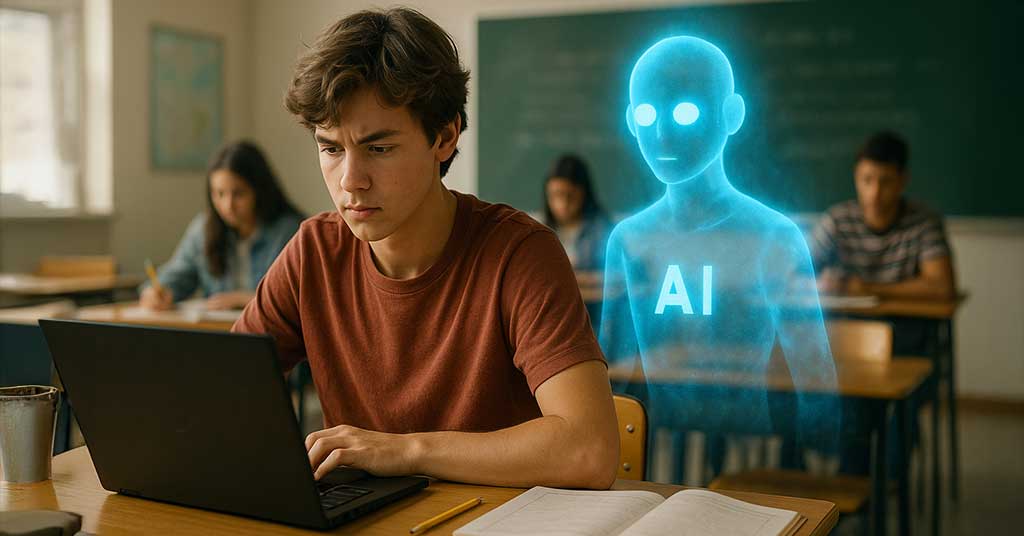
A few weeks into the school year, Canadian teachers are seeing firsthand how quickly artificial intelligence is changing the classroom—and not always for the better.
Technology has always been a mixed blessing in schools. For example, while calculators made it easier to solve advanced math problems, they also gave students a ready-made excuse for not learning their multiplication tables. This created a problem for classroom teachers who knew the importance of these skills.
Of course, it would have been a mistake to stop teaching basic math to students just because calculators were available. Good teachers know that calculators are a tool, not a replacement for memorization and critical thinking. More recently, the internet has made it much easier for students and teachers to access specific information from anywhere around the world.
Now teachers must deal with the growing use of AI.
Not only can AI programs, such as ChatGPT, write formal essays, create original stories and craft elegant poetry, they are getting better at it every day. It’s becoming increasingly difficult for teachers to distinguish between assignments written by AI and those written by students.
ChatGPT-5 is the latest version of this evolving chatbot. It’s designed to learn your habits and anticipate your latest needs. Instead of just drafting a letter when you ask it to, ChatGPT-5 suggests that it’s time to send a letter before writing it for you. It really does seem designed to take the place of human thinking.
Unsurprisingly, the growing popularity of AI has led to many educators suggesting that there’s no need to have students memorize facts or commit historical events to memory. Rather, they argue that it’s time to move away from so-called rote learning and embrace creativity and critical thinking instead.
While this argument has a certain amount of intuitive appeal, it is dead wrong. The reality is that it’s impossible to think critically about something you know nothing about. There’s a huge difference between a student who knows by memory the factors that led to Canadian Confederation in 1867 and students who need ChatGPT to tell them the names of the provinces involved.
One of the most essential concepts in education is cognitive load theory. Cognitive load theory says that because our working memory is limited, it’s important to transfer as much knowledge as possible into our long-term memory. This is why it’s nearly impossible for someone to solve a multi-step algebraic equation if they don’t know basic math facts such as the order of operations.
In addition, there is a strong correlation between background knowledge and reading comprehension. Simply put, the more you know about the topic of an article or book, the higher your ability to understand what it means. This is why students usually have no trouble reading complex books and articles about topics that they have studied and are interested in, because they already possess considerable background knowledge.
Thus, while AI is having an undeniable impact in classrooms, it’s crucial that we remain focused on the things that matter most. Students need to continue learning their math facts, and they also need to memorize plenty of historical and scientific facts. The use of these basic skills will never change.
Good teachers, of course, will focus on these basics, and their students will be thankful.
Michael Zwaagstra is a senior fellow with the Frontier Centre for Public Policy.
Explore more on Artificial Intelligence, Education reform
The views, opinions, and positions expressed by our columnists and contributors are solely their own and do not necessarily reflect those of our publication.
Troy Media empowers Canadian community news outlets by providing independent, insightful analysis and commentary. Our mission is to support local media in helping Canadians stay informed and engaged by delivering reliable content that strengthens community connections and deepens understanding across the country.

