
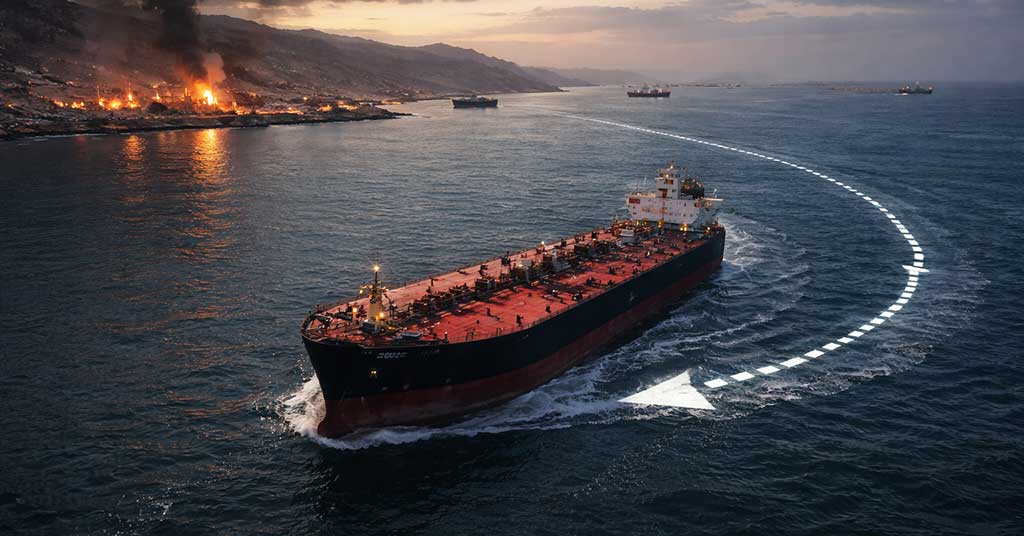
The Strait of Hormuz blockade has shattered global trust and triggered a permanent pivot to energy sources we can actually rely on
The blockade of the Strait of Hormuz is pushing prices higher and cutting demand but, more importantly, forcing the global energy system to find alternative sources of supply.
People and businesses are already cutting back on energy use. The International Energy Agency says “demand destruction” is already underway. It shows up in reduced consumption, flight cancellations and policy measures, advisories and restrictions aimed at cutting fuel use.
Energy-rich Canada is no exception. Canadians are already feeling it at the pump. Even though Canada produces its own oil, global prices still largely determine what Canadians pay for gasoline and other fuels. Citing Heather Exner-Pirot of the McDonald Laurier Institute, Kiera Miller said that, despite being a major oil exporter, Canadians are not insulated from higher prices.
The disruption exposes a weakness in how global oil is supplied and moved around the world. Global oil supply relies on maritime chokepoints and remains concentrated in the Middle East. When one is disrupted, the system starts to come under pressure. Confidence in the Strait of Hormuz has been shaken and producers and consumers alike are now being forced to look elsewhere for supply.
Alternative routes in the Middle East cannot make up the shortfall. Saudi Arabia can divert some crude to Yanbu Port on its Red Sea coast but most of its oil is produced in the east and normally shipped from Ras Tanura, its main export terminal on the Persian Gulf. Getting oil to Yanbu depends heavily on the East-West pipeline, which can carry up to seven million barrels per day, but not all of that capacity is available for export. The UAE’s Abu Dhabi Crude Oil Pipeline provides another bypass to the port of Fujairah on the Gulf of Oman. Combined, these routes offer roughly 8.5 million barrels per day. That is insufficient to replace flows through the Strait of Hormuz.
Additional capacity from Iraq to the Eastern Mediterranean via Turkey exists, but it is underutilized and unlikely to expand quickly.
Some countries are moving to secure alternative suppliers, including the United States, as they look to replace disrupted Middle East flows. Canada’s ability to respond to increased demand is limited by years of constrained pipeline and export capacity, the result of policy and regulatory decisions made by the Liberal government over the last decade that have restricted access to global markets.
Others are using the disruption to start speeding up plans to diversify their energy sources. China, the world’s largest importer, is expanding renewable energy. Governments in Europe and Asia are pushing electrification in transport and heating. Investment in solar, wind and battery technologies is rising.
Shifts like this tend to stick. The oil shocks of the 1970s forced lasting improvements in energy efficiency and reduced oil demand per capita. This time, the effect is likely to be deeper because supply is more diversified and alternative sources of energy are already viable at scale. The cost of solar panels has fallen sharply, wind power has become more competitive and battery prices have declined to the point where substitution is realistic.
The blockade of the Strait of Hormuz is no longer just a supply shock. It is cutting demand and forcing a shift away from Middle East supply. The adjustment is already underway, and it may not be easy to reverse.
Toronto-based Rashid Husain Syed is a highly regarded analyst specializing in energy and politics, particularly in the Middle East. In addition to his contributions to local and international newspapers, Rashid frequently lends his expertise as a speaker at global conferences. Organizations such as the Department of Energy in Washington and the International Energy Agency in Paris have sought his insights on global energy matters.
Explore more on Energy sector, Energy security, Energy transition, Canadian economy
The views, opinions, and positions expressed by our columnists and contributors are solely their own and do not necessarily reflect those of our publication.
Troy Media empowers Canadian community news outlets by providing independent, insightful analysis and commentary. Our mission is to support local media in helping Canadians stay informed and engaged by delivering reliable content that strengthens community connections and deepens understanding across the country.

